We believe that informed patients make better health decisions. Our education center provides clear, reliable information about:
Our resources are designed to help you:
Understand your diagnosis
Learn about treatment options
Take an active role in your health
Our team is led by experienced specialists in hepatology and gastroenterology who are nationally recognized for their expertise in liver disease and clinical research.
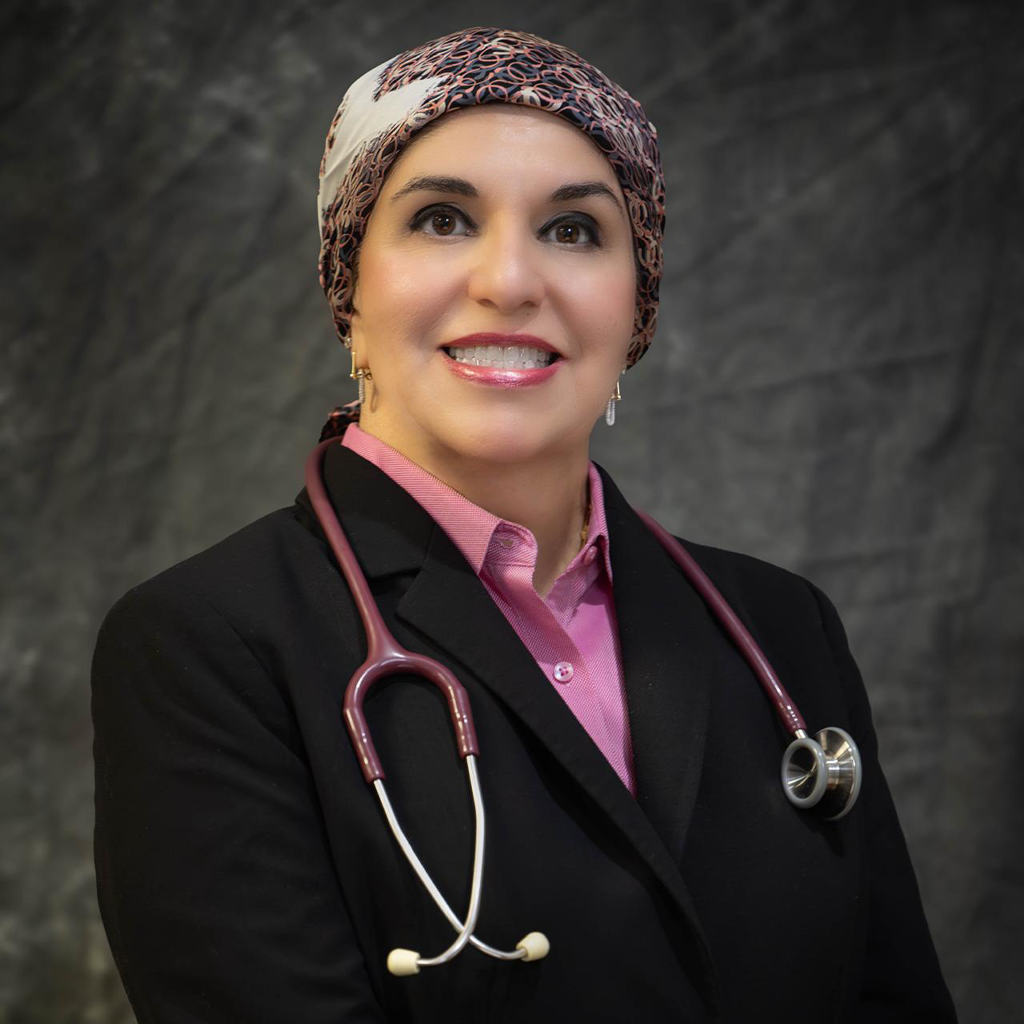
Medical Director Board Certified in Gastroenterology
Medical Director Board Certified in Gastroenterology

APRN, FNP-BC
APRN, FNP-BC

PhD, FNP-C
PhD, FNP-C
Reem Ghalib, MD
Ejeanee Queen, APRN, FNP-BC
Cheryl D. Levine, PhD, FNP-C
The liver is the second largest organ in your body. It is a very important organ since it processes what you eat and drink into energy and nutrients that your body can use. The liver also removes harmful substances from your body. You only have one liver and you cannot survive without your liver.
Alcohol-associated liver disease is caused by heavy use of alcohol. The liver’s job is to break down alcohol, so if you drink more than it can process, it can become badly damaged. Fatty liver can happen in anyone who consumes a lot of alcohol. Alcohol-associated hepatitis (acute inflammation in the liver caused by excessive alcohol use) and cirrhosis (advanced scarring in the liver) are linked to long-term unhealthy alcohol use. Healthcare providers do not yet know why some people who drink alcohol develop varying levels of liver disease while other people that drink alcohol are minimally affected. Some research suggests a possible genetic component with this, but this connection is not yet clear.
Heavy alcohol use is defined as drinking five or more drinks per day on any day or more than 15 or more drinks per week for men. For women, more than four drinks per day on any day or eight or more drinks per week is considered heavy alcohol use. One standard drink is 14 grams of pure alcohol. Examples include 12 ounces of regular beer, 5 fluid ounces of wine, one shot of distilled spirits.
The biggest thing you can do for the health of your liver is to stop all alcohol use. Currently there are no medications approved to treat alcohol-associated liver disease. There are medications for alcohol use disorder (AUD) and for metabolic-associated fatty liver, but no medications that address both. Currently there are clinical trials ongoing that are trying to help both with alcohol over-use as well as fatty liver itself. If you are interested in more information, you may call 817-471-1070. We are located at 1009 Magnolia Street in Arlington, Texas.
Alcohol use disorder (AUD) is a medical condition characterized by the inability to stop or control alcohol use despite unfavorable social, occupational or health consequences. AUD can be mild, moderate or severe. There can be changes in the brain as a result of chronic alcohol use that may have long lasting results. With support, people with AUD can achieve and maintain recovery with their alcohol use. Treatments include medications, counseling, and support groups
Fatty liver often has no symptoms, but some people may experience right sided abdominal pain, tiredness, weakness, and weight loss. Acute alcohol-associated hepatitis and cirrhosis can cause a wide variety of symptoms including fever, weakness, nausea/vomiting, abdominal discomfort, loss of appetite, poor nutrition, weight loss, jaundice (yellowing of skin/eyes), ascites (build up of fluid in the belly), bleeding in the gastrointestinal tract, enlarged spleen, increased infections, kidney failure, and encephalopathy (confusion).
Lab work can be done to assess liver enzymes and other factors that can show how advanced your liver disease might be. Liver biopsies can also be done, though this is not usually done as first line of evaluation. Imaging such as ultrasound, CT scan, and MRIs can also be used to assess the liver and other organs.
Reem Ghalib, MD
Ejeanee Queen, APRN, FNP-BC
Cheryl D. Levine, PhD, FNP-C
A FibroScan® is a medical device used to scan the liver. It uses a technology called transient elastography, a form of ultrasound. It measures the amount of fat and stiffness or scarring of the liver.
The liver does many things for your body, more than 500 functions! It helps clear the blood of toxins and bilirubin. It produces bile to help you digest your food. It stores energy for you to use later in the form of glycogen. It is involved with making or regulating different components of your blood and helps support your immune system. The health of the liver is vitally important to our overall health.
FibroScans® are used to assess the health of the liver. It is used to help diagnose liver disease and monitor different diseases including metabolic associated liver disease, alcohol associated liver disease, and viral infections of the liver, all of which can lead to cirrhosis of the liver.
A qualified provider will go over the results with you immediately following the examination. They will make recommendations based on the results and your overall health. If you were sent to the clinic by your doctor or advanced level provider, they will be sent a copy of the results and interpretation as well.
Call us today to schedule: 817-471-1070. We are located at 1009 Magnolia Street in Arlington, Texas.
To prepare, you will be asked to fast for several hours prior to the scan. You should choose comfortable clothes. You will lay on your back with your right arm up over your head and your right leg crossed over your left. This provides access to your rib cage over where your liver is located. Gel is applied to a probe which will be placed between your rib spaces. You will feel pressure and a slight “thumping” sensation as it measures the amount of fat and stiffness in your liver. A FibroScan® typically takes 10 minutes to perform.
Reem Ghalib, MD
Ejeanee Queen, APRN, FNP-BC
Cheryl D. Levine, PhD, FNP-C
Hepatitis C (HCV) is a viral infection that affects the liver. It can cause both acute illness as well as a long-term illness and can, for some, be life threatening. Hepatitis C is spread through infected blood. This can be from reuse of needles or transfusion of unscreened blood/blood products. Less commonly, Hepatitis C can be spread from mother to child or between sexual partners.
Symptoms of acute hepatitis C include fever, fatigue, loss of appetite, nausea, vomiting, abdominal pain, dark urine and jaundice (yellowing) of the skin or eyes. For chronic hepatitis C, there may not be many symptoms unless the liver becomes damaged.
Hepatitis C is diagnosed with a blood test. This blood test both tells us the amount of virus in the blood and what specific type of HCV you have, called a genotype.
Since Hepatitis C affects the liver, the biggest complication related to Hepatitis C is long term liver disease which can progress to cirrhosis of the liver, liver cancer, and liver failure. Those with acute hepatitis C are at risk for liver failure as well.
There are a lot of therapies currently that are highly effective at treating Hepatitis C. The goal with therapy is to cure the disease and prevent the liver damage discussed above.
New drugs are being developed. The goal is to improve the efficacy (cure rate) of treatments. For more information on clinical trial options for patients with Hepatitis C, call TCRI at 817-471-1070. We are located at 1009 Magnolia Street in Arlington, Texas.
Reem Ghalib,MD
Ejeanee Queen, APRN, FNP-BC
Cheryl D. Levine, PhD, FNP-C
The liver is the second largest organ in your body. It is a very important organ since it processes what you eat and drink into energy and nutrients that your body can use. The liver also removes harmful substances from your body. You only have one liver and you cannot survive without your liver.
Metabolic-associated fatty liver disease is the buildup of extra fat in the liver cells that is not caused by alcohol use (steatosis). The more severe form of MAFLD is MASH which stands for metabolic-associated steatohepatitis and causes the liver to swell, become inflamed and get damaged by developing scarring of the liver. NASH is one of the leading causes of liver cirrhosis (advanced scarring of the liver) in the United States. Up to 25% of adults with MASH may have liver cirrhosis. MASH may eventually lead to liver cancer and even liver failure over time.
MAFLD tends to develop in people who are overweight, obese, diabetic, have high cholesterol or those that have high triglycerides. However, some people that do not have any of these risk factors may still have MAFLD as genetics and other factors probably play a role as well.
MAFLD has no symptoms. Some patients complain of some vague discomfort over the right upper abdomen where the liver is which is non-specific but could be a result of a swollen liver. Other patients complain of fatigue or nausea. When patients have advanced liver cirrhosis they can complain of abdominal swelling with fluid, yellow eyes, gastrointestinal bleeding, confusion and liver cancer.
MAFLD is suspected if the blood tests show elevated liver enzymes particularly in a person with risk factors of MAFLD. Patients are questioned about their alcohol intake as it can cause a similar picture. Blood work is ordered to rule out other causes of elevated liver enzymes such as viral hepatitis, inherited and autoimmune liver diseases. Usually imaging of the liver is ordered which a lot of times can show fat on the liver. The gold standard for confirming MAFLD is through a needle liver biopsy and having the liver specimen get reviewed by a pathologist. The pathologist will be able to see that the liver cells have fat and see the degree of inflammation and the scarring on the liver.
There are several methods to assess the amount of liver damage (scarring on the liver). FibroSURE is a blood test that estimates the amount of scarring on the liver. FibroScan is a machine that uses technology called vibration controlled transient elastography to assess liver stiffness which is a reflection of the amount of scarring on the liver. There have been significant advances with MRI imaging, which gives us a highly accurate, non-invasive way to measure the fat content of the liver as well as the stiffness of the liver. Needle biopsy of the liver is also used to diagnose MAFLD and to show the amount of inflammation and scarring on the liver as well as potentially other causes of liver disease. It is an out-patient procedure usually done under ultrasound guidance by the radiologist where a needle is passed through the skin using local anesthesia and sedation. The pathologist reviews the specimen under the microscope and determines if the patient has MASH and if they have scarring of the liver and the amount of it. In patients with advanced liver cirrhosis, the blood tests will show sign of liver failure. In those cases, liver transplantation may need to be considered.
There is currently only one medication approved for the treatment of MASH. We have traditionally instructed the patients to lose weight, control their diabetes and lower their cholesterol and triglycerides, exercise, eat healthy and avoid alcohol. Other medications to reverse the fat in the liver, the inflammation as a result of fat and the scarring are in development that we hope will provide even better results. There are several clinical trials currently available for patients with MAFLD and MASH at this time. Results seem to be promising so far and the medication are moving forward in the development. If you are interested in more information, you may call 817-471-1070. We are located at 1009 Magnolia Street in Arlington, Texas.
Reem Ghalib,MD
Ejeanee Queen, APRN, FNP-BC
Cheryl D. Levine, PhD, FNP-C
The liver is the second largest organ in your body. It is a very important organ since it processes what you eat and drink into energy and nutrients that your body can use. The liver also removes harmful substances from your body. You only have one liver and you cannot survive without your liver.
Primary Biliary Cholangitis (PBC) formerly known as primary biliary cirrhosis is a chronic liver disease resulting from progressive destruction of the bile ducts in the liver – called the intrahepatic bile ducts. Bile produced in your liver travels via these ducts to your small intestine where it aids in digestion of fat and fat-soluble vitamins (A, D, E and K). When the ducts are destroyed, bile builds up in the liver contributing to inflammation and scarring (fibrosis). Eventually this can lead to cirrhosis, and its associated complications, as scar tissue replaces healthy liver tissue and liver function becomes increasingly impaired.
The exact cause of PBC is unknown. It is not caused by alcohol or illegal-drug use. It’s most likely an autoimmune disease that occurs in genetically susceptible individuals. The body’s immune system mistakenly attacks and destroys its own cells- in this case, the cells of the intrahepatic bile ducts. Some people diagnosed with PBC may also have one or more other autoimmune diseases. Women are nine times more likely than men to develop PBC, meaning that women make up about 90% of PBC cases. The disease most often develops during middle age and is usually diagnosed in people between the ages of 35 – 60 years. There appears to be a genetic component to developing PBC, as it’s more common in families where one member is already affected.
PBC may progress slowly and many people do not have symptoms, particularly in the early stages of the disease. The most common initial symptoms are fatigue and itching of the skin (pruritus). Other symptoms may include:
*Abdominal Pain
*Darkening of the Skin
*Small yellow or white bumps under the skin (xanthomas) or around the eyes (xanthelasmas)
Individuals may also complain of having dry mouth and eyes, and bone, muscle and joint pain.
As the disease progresses, symptoms of cirrhosis can develop including:
*Yellowing of the skin (jaundice)
*Swelling of the legs and feet (edema)
*Enlarged abdomen from fluid accumulation (ascites)
*Internal bleeding in the upper stomach and esophagus from enlarged veins (varices)
Thinning of bones (osteoporosis) leading to fractures is another complication of PBC. While this is more common in late stages of the disease, it can occur earlier as well. In addition, people with cirrhosis are at increased risk for liver cancer (Hepatocellular Carcinoma).
Because many people with PBC have no symptoms, the disease is often discovered incidentally due to abnormal results on routine liver blood tests. Once PBC is suspected, a blood test to check for antimitochondrial antibody (AMA) is done. This test is positive in nearly all people with PBC. A liver biopsy, where a small needle can help confirm the diagnosis. Imaging studies may be used to rule out other diseases, or to further evaluate patients once they have been diagnosed with PBC.
Intense itching is one of the most common symptoms of PBC. Over-the-counter antihistamines like diphenhydramine (Benadryl) may be helpful. Other agents such as rifampicin, naltrexone, cholestyramine and sertraline may be prescribed. Dry eyes can be relieved by using eye drops (artificial tears). Dry mouth may be helped by sucking on hard candy or chewing gum, both of which increases saliva. There are also saliva substitutes and some medications that can be used.
While there is no cure yet for PBC, there are medications that may help slow the disease progression and improve symptoms. Potential drugs to improve the damage from PBC are currently being tested and are available in clinical trials. However, it may still take years before the FDA gives approval for any additional medications for PBC. If you are interested in more information, you may call 817-471-1070. We are located at 1009 Magnolia Street in Arlington, Texas.